Every modern wearable will give you a sleep score. A number out of 100, a breakdown of stages, a readiness rating, and a verdict on last night that arrives before you’ve had coffee. The presentation is authoritative, and that’s exactly where the trouble starts — because the confidence of the display doesn’t match the confidence of the underlying measurement.
That doesn’t make sleep tracking useless. It makes it a tool that rewards knowing what it’s actually measuring. This is a look at how these devices infer sleep, where they’re dependable, where they aren’t, and how to get value from the data without letting it run your morning.
How a Wearable Guesses at Sleep
A clinical sleep study measures brain activity directly, along with eye movement, muscle tone, breathing, and oxygen levels, using sensors attached across the body. That’s the reference standard, and it’s the only method that observes sleep stages rather than inferring them.
A watch or ring has none of that. It has an accelerometer that detects movement, an optical sensor that reads pulse and heart-rate variability through the skin, and usually a skin temperature sensor. From those signals, an algorithm estimates when you fell asleep, when you woke, and which stage you were probably in at each moment.
The inference is reasonable — heart rate drops and stabilizes in deep sleep, variability and movement patterns shift during REM — but it is an inference. Two devices on the same wrist on the same night will often disagree, sometimes substantially, on how much deep sleep you got. They rarely disagree much about when you fell asleep and when you woke up.
That difference is the key to using the data well.
What’s Reliable, and What Isn’t
Generally reliable:
- Sleep and wake times. Detecting whether you’re asleep is the easiest problem, and modern devices are good at it. Total time asleep is usually within a reasonable margin.
- Trends over weeks. Even if a night’s absolute numbers are imprecise, the same device applying the same algorithm to the same person produces comparable results night to night. A downward trend over three weeks is meaningful information.
- Resting heart rate and its variability. These are directly measured rather than inferred, and both are legitimately useful signals about recovery, illness onset, and the effect of alcohol or late meals.
- Breathing-rate stability and large disturbances. Devices increasingly flag irregular patterns, which can be a prompt to seek a proper evaluation.
Treat with caution:
- Sleep-stage breakdowns. Independent comparisons against clinical studies have consistently found stage classification to be the weakest part of consumer tracking. Deep sleep in particular is often over- or under-reported.
- Composite scores. A single number combining duration, stages, timing, and heart rate is a product decision, not a medical measurement. Two brands will score the same night differently because they weight things differently.
- Night-to-night comparisons of small differences. A score of 74 versus 81 is well within the noise. Reacting to it is reading tea leaves.
- Anything framed as a diagnosis. These are wellness devices. Suspected sleep apnea, insomnia, or persistent daytime exhaustion belongs with a doctor, and a wearable flag is a reason to make the appointment rather than a substitute for it.
Ring or Watch?
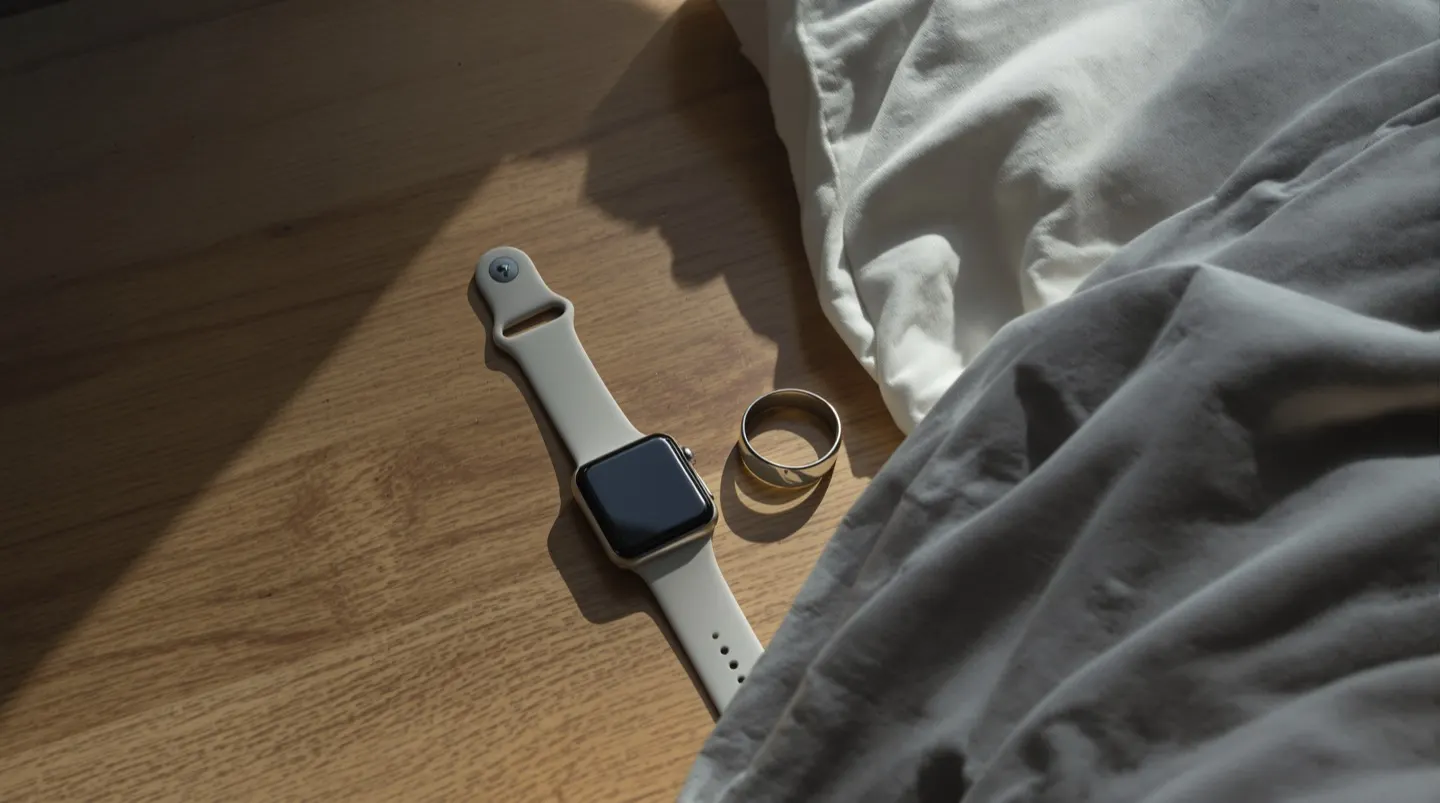
Both work; the differences are practical rather than scientific. Rings are more comfortable to wear overnight, don’t glow, and tend to have longer battery life, so people actually wear them consistently — which matters more than sensor quality, since a device you take off half the time produces useless trends. Watches offer a screen, more daytime features, and often better ecosystem integration, but a large watch is not what everyone wants to sleep in.
Consistency of wear is the single biggest factor in whether the data ends up being worth anything. Pick the one you’ll keep on.
Using the Data Without Being Ruled by It
There’s a well-documented irony in sleep tracking: worrying about your sleep score can itself disturb sleep. Clinicians have a name for the anxious pursuit of perfect sleep data, and the recommended treatment is often to stop checking every morning.
A healthier pattern is to look weekly rather than daily, and to use the tracker to test specific questions rather than to grade yourself. Does a 9pm workout change your resting heart rate overnight? Does alcohol shift your sleep timing? Does a consistent bedtime move your weekly average? Those are answerable with this data, and the answers are personal enough to be genuinely useful.
What It Means for You
Sleep trackers are good at answering “how much and how consistently,” and much weaker at “what quality.” Use the first, discount the second, and pay attention to weeks rather than nights. If something in the data worries you — repeated breathing irregularities, exhaustion that doesn’t match the numbers — treat it as a prompt to see a professional rather than as an answer in itself.
Within those limits, a wearable is a genuinely helpful nudge toward the least glamorous and most effective sleep advice there is: go to bed at roughly the same time, most nights.