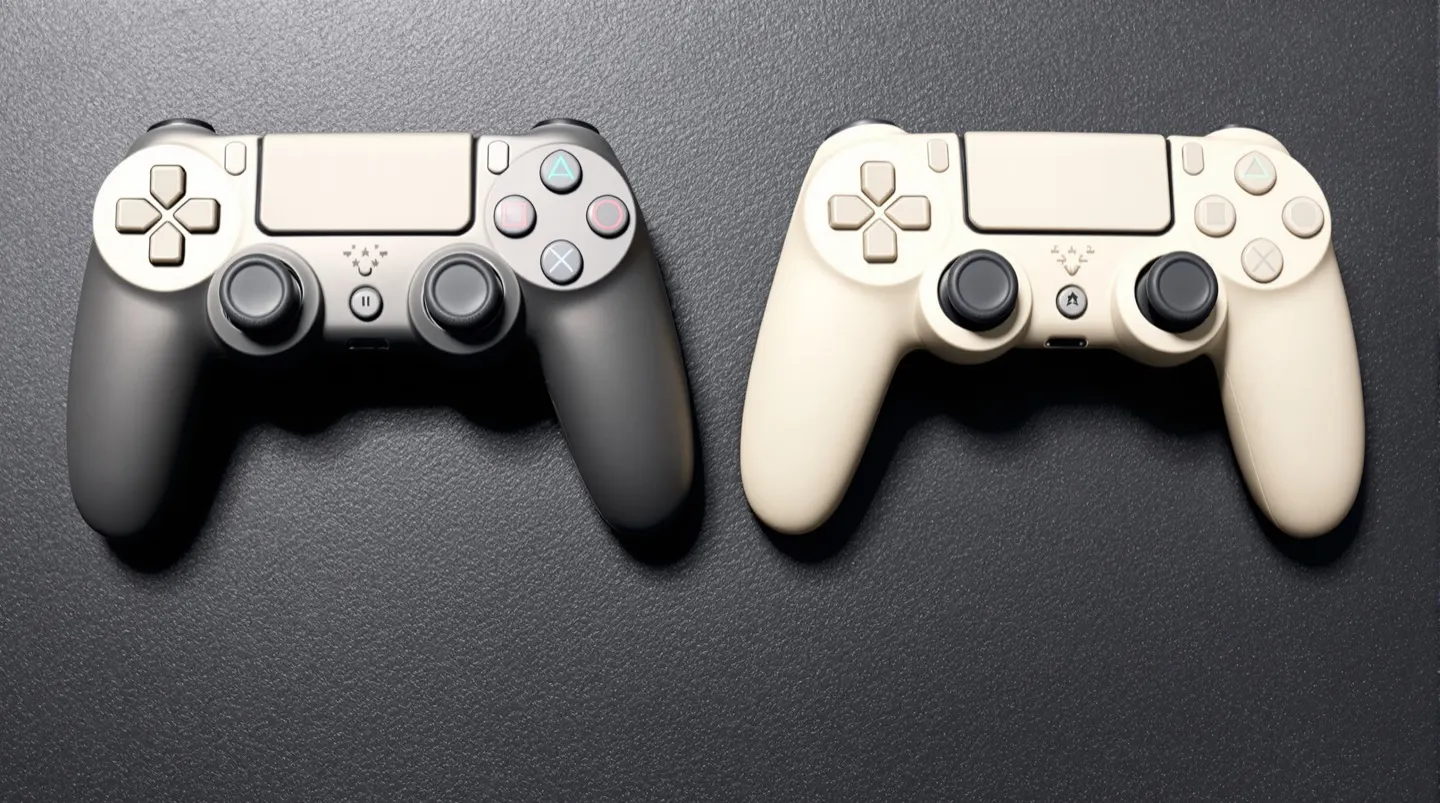
Console generations used to be simple: you bought a machine at launch, and it stayed current for roughly seven years. This generation has been more complicated. Sony released the PlayStation 5 Pro as a mid-generation upgrade aimed at players who want higher fidelity and better performance. Microsoft, meanwhile, has taken a different path with the Xbox Series X — leaning into Game Pass, cross-platform availability, and a coming generation of hardware rather than a mid-gen “Pro” refresh. The result is two platforms that look similar on paper but have diverged in strategy. This isn’t a benchmark comparison. It’s a look at where each platform stands and how to decide which fits your gaming habits.
Hardware and Performance Approach
The PlayStation 5 Pro is, by design, a refinement of the base PS5 rather than a brand-new console. Reports and Sony’s own positioning describe it as offering a more powerful GPU, faster ray tracing, and a proprietary image-upscaling technology intended to deliver sharper image quality at higher frame rates. The goal is letting games look and run better on the same titles you’d play on a standard PS5, rather than unlocking a separate library of Pro-only games. For someone with a high-end TV — especially one with HDMI 2.1, VRR, and 120Hz support — the gains are most visible in supported titles. For someone on an older 1080p set, the practical difference is smaller.
The Xbox Series X, by contrast, has not received a mid-generation “Pro” counterpart in the same way. Microsoft has instead focused on the Series X and Series S as the current lineup, with Game Pass and software optimization doing the heavy lifting between launch and whatever comes next. The Series X itself remains a capable machine on par with the base PS5 in raw specification terms, and reports suggest Microsoft is more interested in a true next-generation device than in an incremental refresh. That means Xbox buyers today are getting a stable, well-supported platform rather than a moving target — which is either reassuring or slightly behind the curve, depending on how you view it.
A key point: neither platform’s mid-gen story changes the fundamental games you can play. The PS5 Pro does not unlock exclusives the base PS5 cannot run, and the Xbox strategy has not deprioritized the Series X. The decision still comes down to games, ecosystem, and how you play.
Games, Services, and Ecosystem
This is where the two platforms feel most different.
- PlayStation’s strength is exclusive software. Sony’s first-party studios consistently release critically acclaimed single-player games — action-adventure titles, cinematic narratives, and established franchises — that drive console purchases. The PS5 library also benefits from a large back catalog through PlayStation Plus tiers and strong third-party support.
- Xbox’s strength is Game Pass. Microsoft’s subscription service offers a rotating library of hundreds of games, including first-party titles on the day they launch. For players who want breadth and who try many different games, Game Pass is one of the best values in gaming. Microsoft has also made its first-party games available on PC and, in some cases, on PlayStation, which blurs the traditional exclusivity line but expands where you can play.
- Backward compatibility is strong on both, with Xbox arguably offering a more thorough back-catalog story spanning original Xbox, 360, and One titles. PlayStation’s backward compatibility is focused mainly on the PS4 generation.
- Online and social features differ in detail rather than kind. Both require a paid subscription for online multiplayer and offer monthly games, cloud saves, and discounts.
Which Makes Sense for You
If your must-play list is full of Sony’s first-party titles, the choice is effectively made for you — a PS5 or PS5 Pro is the answer. If you mostly want to try lots of games, play across PC and console, or care about value-per-dollar, Xbox with Game Pass is genuinely compelling. The PS5 Pro specifically makes sense for players who already own a base PS5 and want better performance on a high-end display; coming from no console at all, the standard PS5 remains an excellent value and is worth considering first.
The practical takeaway: don’t overthink the Pro-versus-X question as a pure hardware contest. Pick the platform whose games and services match how you actually play, and treat the hardware specs as a secondary concern. Both consoles will run this generation’s library well, and neither is likely to be a bad purchase for someone who picks the ecosystem that fits their taste.